





sleeping positions: what is the best sleeping position for you?
If you’ve got back pain, a sore neck, or simply can’t get comfy, there’s a good chance you’re sleeping in the wrong position. There’s no one-size-fits-all for finding your perfect sleeping position so it’s important to think about what makes you tick as you get ready for slumber.
From body pains and difficulty breathing to making the most of your mattress, join us as we help you find the best sleep position to guarantee a restful and restorative sleep every night.
the sleep summary: what is the best sleeping position?
The best sleeping position for you will depend on what position you find most comfortable as well as if you experience any pain or discomfort while you sleep.
Experts recommend sleeping on your back to help ease back pain as this keeps your spine aligned and your neck supported. For lower back pain, sleeping on your side with a pillow between your legs is the best position for preventing any twists or turns in the night.
what does your sleeping position say about you?
You can learn more than you’d think about a person based on their sleeping position. Whether you’re a side sleeper to stop snoring or a back sleeper to relieve the pains from a busy day, the way you sleep tells a story that’s uniquely yours. But why do we sleep in certain positions? And what is the best sleeping position? We’re here to guide you through some common sleep positions and explain how you can stop tossing and turning and sleep better.
side sleeping positions
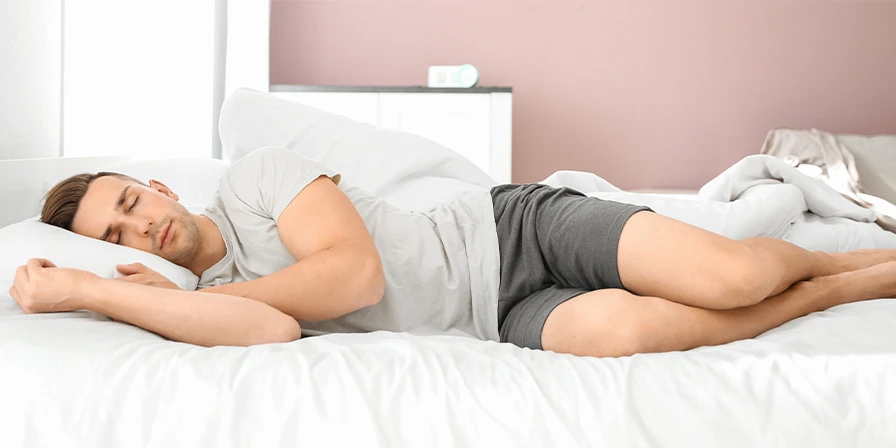
Whether you’re curled up tight in the foetal position, or laid straight like a log, side sleeping positions are often the most popular as it allows you to keep your body aligned and airways clear throughout the night.
back sleeping positions
Back sleepers have a reputation for spreading out like a starfish, covering every inch of the bed, but this position doesn’t always mean occupying the whole bed. Back sleepers also often lay flat with their arms straight to maximise alignment or with your hands behind your head for extra neck support, it’s all about what you find comfy.
front sleeping positions
Despite causing more discomfort than other positions, front sleepers may find more relief from snoring by laying flat out on their front. If sleeping on your front is how you fall asleep, focusing on your spinal alignment is key with a supportive pillow and mattress.
combination sleeping position
We aren’t machines with an off switch which power down at night, we still toss and turn while we sleep, meaning many of us are combination sleepers. Whether you start tucked up in a ball only to sprawl out as you enter deep sleep or stage a strategic invasion of your partner’s side of the bed each evening, we all move around to stay comfy.
what is the best sleeping position for couples?
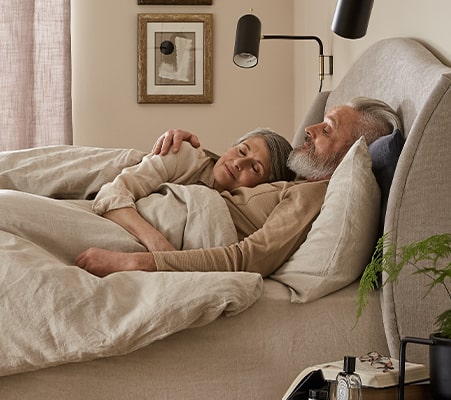
Speaking of couples, the best sleeping position for you and your partner doesn’t always have to match - you don’t have to sleep on your sides staring deeply into each other’s eyes or maintain a strict barrier as you lay on your backs. Instead, you should look to create a sleep setup which allows you to both sleep comfortably in your preferred positions.
This often includes investing in a mattress which prevents ‘roll together’ to stop you coming together as you sleep as you shift positions. Opting for a larger king size or super king mattress and bed can also give you more space to spread out in your unique positions. To find out more, check out our guide exploring the best mattress for couples.
what is the best sleeping position for back pain?
One of the most common reasons for nighttime disturbances is back pain keeping you awake. It can seem to stick around no matter what position you’re in, but many experts suggest sleeping on your back to ease back pain. This position helps you maintain a straight spine and eases joints.
Don’t worry if you can’t get comfy on your back, sleeping on your side can also be great for back pain however, it can be hard to keep your body aligned while on your side. If you’re struggling to get comfy on your side, don’t worry - placing a firm pillow between your knees can help prevent your spine twisting.
best sleep position for lower back pain
If your discomfort lies in your lower back, sleeping on your side with a pillow between your legs can be especially effective. For even more spinal support, opting for a medium firmness hybrid mattress can help. Mattresses such as the Memory Pocket 1400 Mattress support the body while offering a soft, memory layer which contours to your body.
In contrast, the worst sleep position for lower back pain is typically on your front as this flattens the natural curve of your spine and twists your neck to be misaligned with the rest of your body. If laying on your stomach is the only way you can comfortably sleep, switching to a firmer mattress or a softer pillow will help to keep your spine better aligned.
best sleep position for sciatica
Sciatica is a type of nerve pain which can lead to sharp pain running from your lower back to your legs, often getting worse when stationary for long periods, like at night. The best sleep position for dealing with sciatica pain is laying on your pain-free side and resting a pillow between your legs. This keeps your spine straight and prevents any twisting or turning which could provoke your sciatica.
best sleeping position for peripheral artery disease
Peripheral Artery Disease (PAD) is a health condition where blood flow to the arms and legs is restricted, which can often lead to disturbances at night. Sleeping on your back with your upper torso raised can help to encourage blood flow down towards your legs. You can use additional pillows under your shoulders to ensure you stay lifted while you sleep. Many people with PAD also suffer from sleep apnoea which means you may prefer to sleep on your side to keep your airway open in the night. You should still stay elevated while sleeping on your side to maintain blood flow. To find out more, check out our guide covering everything you need to know about sleep apnoea.
what is the best sleeping position for posture?
Ideally, your sleep position should keep your spine and hips in alignment to support your posture. This reduces any strain on your back and neck. Depending on your position preference – side, stomach, back or a mixture of the three – you need to choose the right mattress to promote healthy posture.
Side sleepers benefit from a soft to medium mattress, with just enough give to let your hip sink into the bed.
Stomach sleepers require a firmer, hybrid mattress made from foam or latex which keeps the body in alignment and prevents your spine from curving during the night.
Back sleepers need a medium to firm mattress to keep your spine aligned and muscles relaxed while you sleep. Choose a firmer mattress that offers you support where you need it most.
what direction should your head face when sleeping?
Whether that’s to the left, right or straight up, your head should face whichever way is most comfortable for you while you sleep. Your head direction should usually match your sleeping position to keep your neck aligned with the rest of your spine to ease tension and maintain alignment.
You may also want to consider your sleep space with some people preferring to face a wall whereas others find it easier to rest facing out into the room. The light level in your space is also worth considering as positioning your head away from any windows or mirrors may prevent any unwanted disruptions as the sun rises.
how does Feng Shui impact your sleep position?
If you’re unsure how to work out your perfect sleeping position, you can consider the teachings of Vastu Shastra and Feng Shui. Translated, Vastu Shastra means the “science of architecture”. It puts a lot of value in the layout of your bedroom. Vastu Shastra encourages people to sleep with their head facing southward because the human head is meant to have a polar attraction. It explains that your head should face southward to attract the opposite pole while you sleep. Sleeping northward should be avoided as it can cause dizziness and headaches.
Every bed should have a headboard which symbolises strength and stability. Your bed should also be placed opposite the doorway and against the wall, but not underneath any windows. Like Vastu Shastra, Feng Shui suggests sleeping with your head pointed southward. This can promote the flow of positive energy.
what is the healthiest sleep position?
Sleeping on your back or side is more beneficial to you because these positions make it easier to keep your spine supported and balanced. However, the best position to sleep in depends on your personal needs. For someone with lower back or neck pain, you may want to sleep on your back with your weight evenly distributed. A medium firm mattress uses zoned springs to keep your spine in alignment.
If you have chronic lower back pain, consider a mattress which stores body heat to ease sore muscles. Mattresses made of latex or with gel layers hold onto body heat, keeping you warm and snug. Ultragel™ mattresses include a gel-infused layer to target your pressure points for relief in your sleep and are ideal for side sleepers, the best sleeping position for lower back pain.
If you have sleep apnoea or another breathing disorder, side or stomach sleeping is more effective at keeping your airways open. This is also helpful if you are sleeping with a cough or cold. Side sleeping keeps your nose from feeling as blocked which makes it easier to breathe. If you can only sleep on your back, consider keeping your head elevated with the perfect pillow. Your head should be raised at a 60° angle, high enough to clear your airways without straining your neck.
what are bad sleeping positions?
If you have ever slept in a bad sleeping position, you know it can reduce the quality of your sleep. Poor body alignment can cause headaches, fatigue, lower back pain and neck pain. Avoid bad sleeping positions like laying on your arm or sleeping upright.
Most of us change sleeping position between 30 and 60 times a night. For a restless sleeper, this number can be much higher. If you are a restless sleeper and know you might end up in an uncomfortable position during the night, it’s important you invest in the right mattress. Why not find out more and let our experts help find the perfect mattress for you.
Choose the right sleeping position by listening to your body and what it needs. Find the perfect mattress to support your muscles and keep your spine in alignment, ensuring you wake up each and every morning feeling refreshed.
Alternatively, invest in a mattress topper to improve your sleeping position. Read our advice on how to pick the best mattress topper here.